Do you need Receipt and Invoice - both of them?
On this topic there is no one yes/no answer - everything depends on your business model and how you collect money.
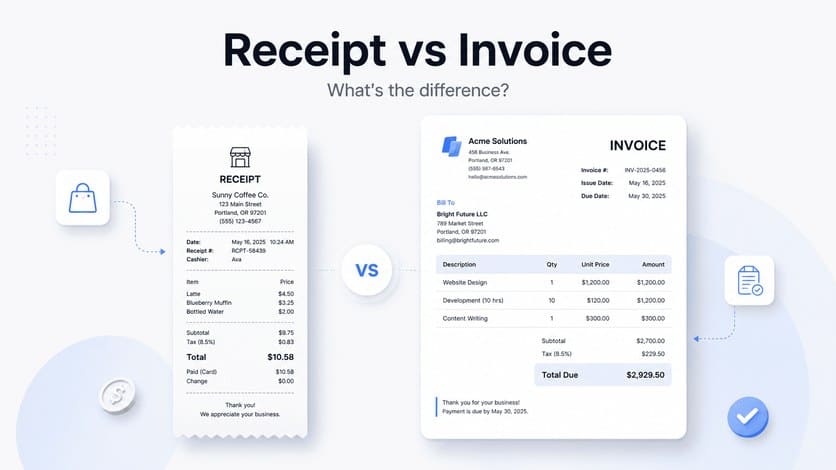
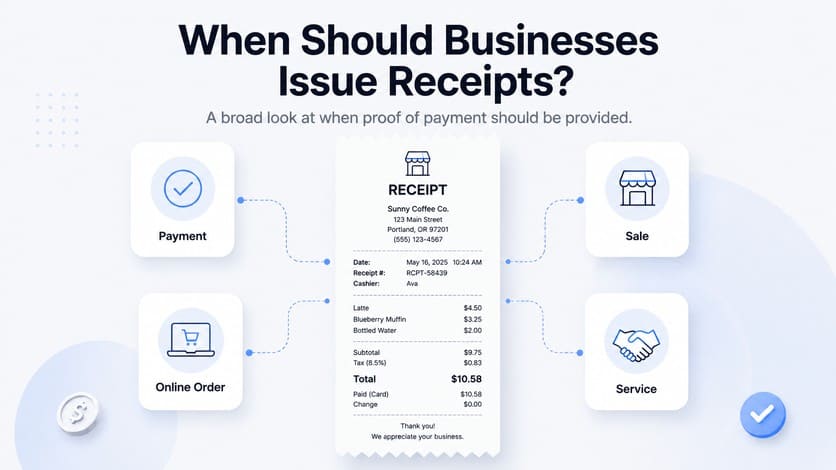
If payment happens on the spot, a receipt is usually enough. A good example for these kinds of businesses would be a coffee shop, a grocery store or a retail business where the customer pays immediately and walks out with a receipt. The transaction starts and ends at the same moment, so no invoice is needed.
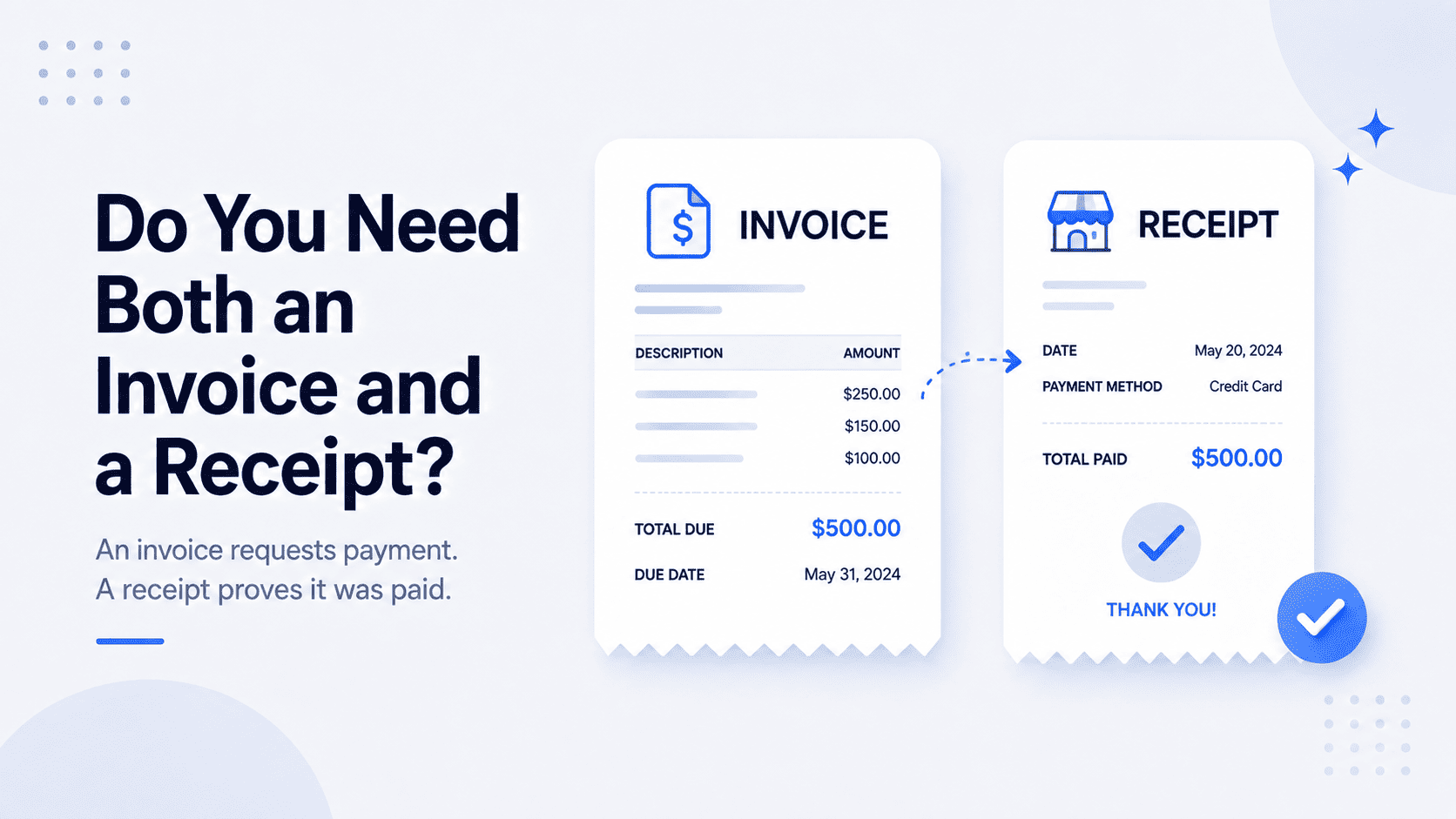
If payment happens later, you generally need both to cover the full path of the transaction. This is the situation for most service businesses - freelancers, consultants, agencies, contractors, and a lot of B2B companies.
What happens when you only keep one?
For better understanding let's look into this example. Let's say a contractor sends you an invoice for $5,400. Services were provided, payment was requested, and after some time you pay as the invoice requested. But no receipt was ever issued and no payment confirmation was saved. Half a year later you have no record of making that payment. The contractor can only show the invoice that was issued, but that's it. What should have been a quick and simple thing to resolve becomes a serious dispute, because the one document that could have solved it in minutes was never made.
For any business regardless of its size, a proper invoice and receipt management directly reduces the time spent on the research for late payments and manual work in general. If you keep both records: invoices and receipts together, then you have all proof needed for any conflict that might appear.
What the IRS expects
If we are talking about IRS requirements, businesses are expected to keep records that support the income, deductions, and credits reported on their tax returns. Publication 583 states explicitly that every business has to keep records of both sides of a transaction - what was billed and what was paid. One document covering only one side of any transaction is not enough.
The general rule is three years after filing, but some situations might stretch that window: six years if income was underreported by more than 25%, seven years for bad debt write-offs, and indefinitely if fraud was involved.
Keeping digital records the right way
The idea of keeping records in paper form for years does not only sound like a burden but old fashioned as well. The good news is, the IRS has accepted electronic records for decades, so going fully digital is not only fine but for most businesses it is the smarter way to manage this. From scanned document copies to high quality phone pictures - all could be used and would qualify as long as key details are legible.
The real question is not whether to go digital - it is which system works best based on how your business operates. For small businesses or freelancers accounting software like QuickBooks, FreshBooks, or Wave lets you create invoices, record payments, and attach receipts all in one place.
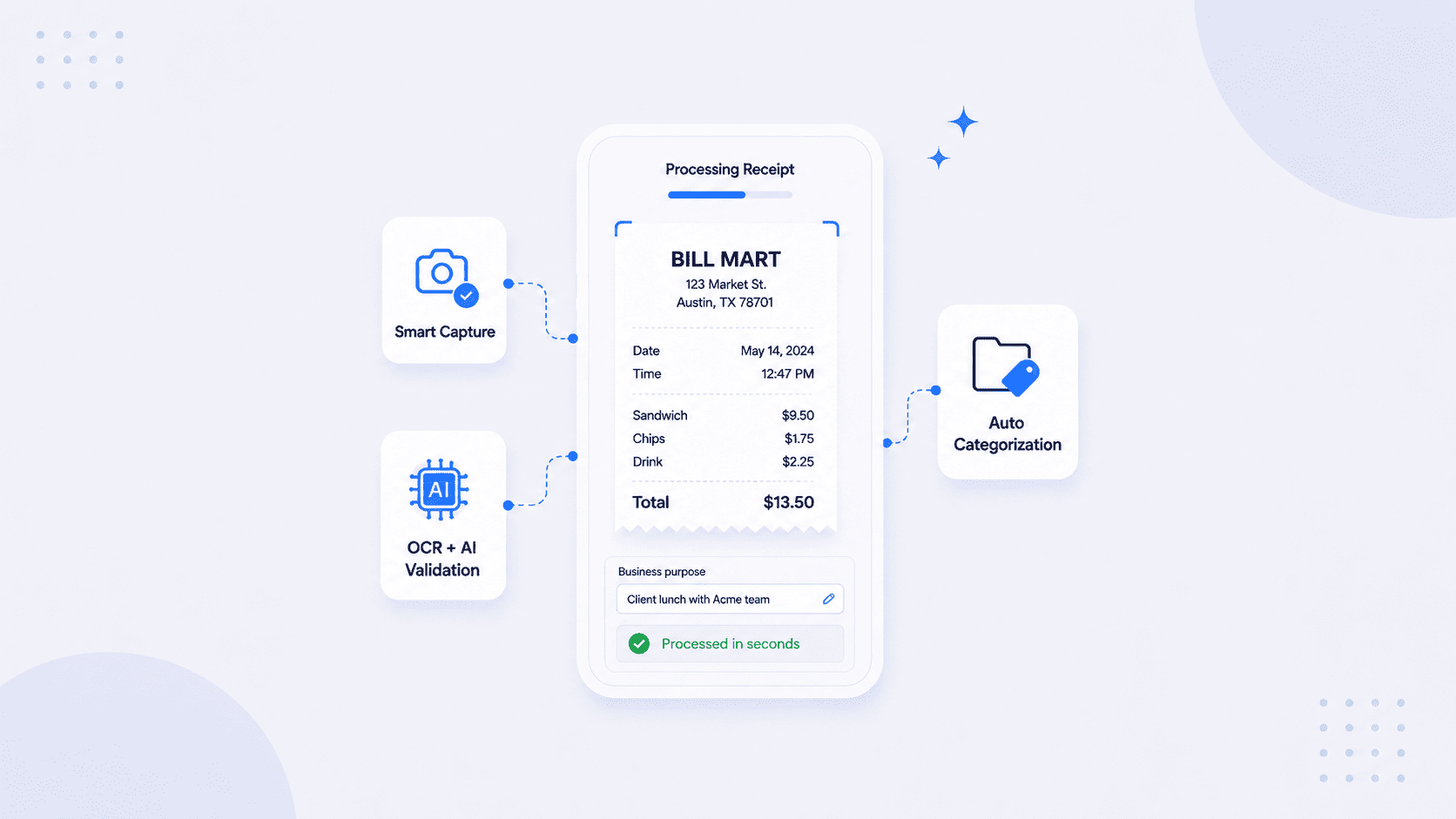
For expense tracking specifically, apps like Expensify or Dext are built around capturing receipts at the moment they happen - you photograph it immediately after the transaction, the app extracts the key details automatically, and the record is stored before you leave the store.
For businesses issuing a high volume of invoices, setting up automated payment confirmations is a huge help for tracking and documenting. Most accounting platforms can send a confirmation email automatically once payment is received, which effectively creates the receipt without any other manual step.
No matter what system you choose, the approach should be the same for any business. Capture the record at the moment it happens, store it in a place where invoice and its receipt are linked together, and make sure you can actually find it when needed. A receipt somewhere in your email and an invoice in a separate folder are technically both there, but when you actually need to find it, that might become mission impossible.
aaaa